
Short answer: endoscopic sinus surgery (FESS) is considered when chronic sinusitis lasts more than 12 weeks despite proper medical treatment, when infections keep returning, or when polyps or complications block the sinuses. Most people with sinusitis never need surgery.
Acute, recurrent and chronic sinusitis
Acute sinusitis usually follows a cold and settles within four weeks. Recurrent acute sinusitis means several clear episodes a year with symptom-free gaps. Chronic sinusitis means symptoms such as a blocked nose, thick discharge, facial pressure or reduced smell lasting 12 weeks or more. The NHS page on sinusitis explains the basics.
What is tried before surgery
- Saline nasal rinses to clear mucus
- Steroid nasal sprays used correctly and regularly
- Treating allergy, which often drives chronic symptoms (an allergy skin prick test helps find triggers)
- Antibiotics only when there is a bacterial infection
- Correcting habits such as smoking
How the decision is made
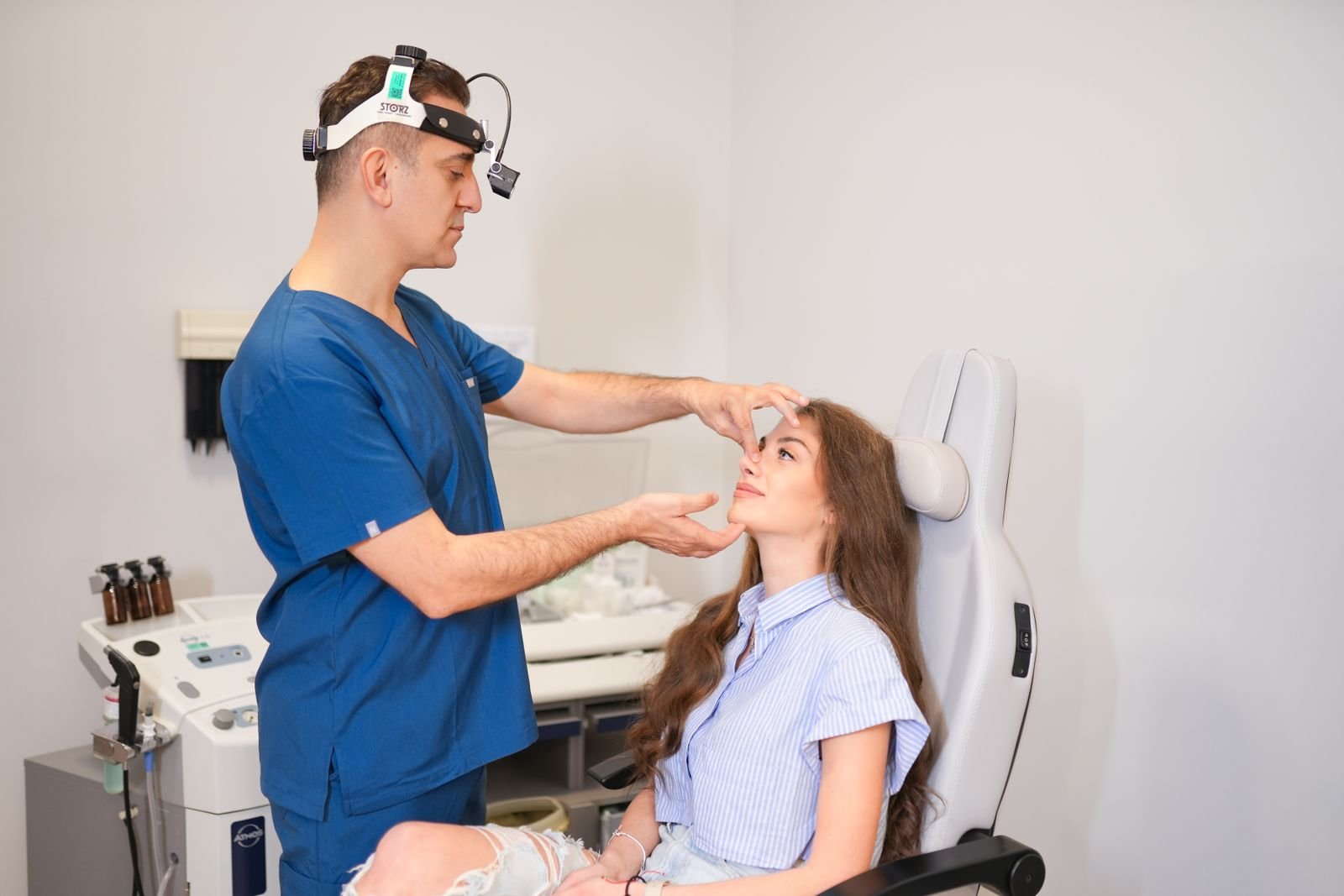
Examination with a nasal endoscope shows the drainage pathways, polyps, pus or a deviated septum. A CT scan of the sinuses is taken when chronic disease is suspected or surgery is being planned. It maps the anatomy and extent of disease.
| Situation | Usual approach |
|---|---|
| Acute sinusitis after a cold | Rinses, sprays, symptom relief; antibiotics only if bacterial |
| Chronic sinusitis improving with medicine | Continue medical treatment and review |
| Chronic sinusitis not improving after adequate treatment | CT scan and discussion of FESS |
| Nasal polyps blocking breathing or smell | Medical treatment, with polypectomy and FESS if needed |
| Swelling around the eye, severe headache or confusion | Urgent assessment for complications |
What FESS involves
Functional endoscopic sinus surgery is done through the nostrils with a thin camera, with no cut on the face. Blocked drainage pathways are opened and diseased tissue or polyps are removed, so the sinuses can drain and medicated sprays can reach the lining. A septoplasty or turbinate reduction is sometimes done at the same time.
In suitable patients, Dr. Udayakumar performs endoscopic nose and sinus surgery under local anaesthesia, which can mean a quicker recovery and suits many older patients and those with other health conditions. Read more on our nose and sinus page.
After surgery
Expect a blocked nose and some discharge for one to two weeks. Saline rinses and follow-up cleaning in the clinic help healing. Surgery does not cure the tendency to inflammation, so sprays and allergy control usually continue.
Frequently asked questions
Is sinus surgery painful?
Most patients describe discomfort and blockage rather than severe pain. Pain is usually controlled with simple painkillers.
Will my sinusitis come back after FESS?
Symptoms improve for most patients, but chronic inflammation can return, especially with polyps or allergy. Ongoing sprays and follow-up reduce this risk.
Can sinus surgery be done under local anaesthesia?
Yes, in selected patients. The doctor decides based on the extent of disease, your health and your preference.
About the author: Dr. Udayakumar, MBBS, MS (ENT), is a consultant ENT surgeon, otologist and vertigo & balance specialist with more than 13 years of experience, founder of Dr. Udaya’s ENT Wellness Centre and SAMANILAI Hearing & Balance Centre, Tambaram, Chennai. Read his profile.
This article is for general information and does not replace a consultation. Last updated: 26 September 2026.
